
eHealth Online
Creating a great digital experience is difficult and never achieved without a lot of effort and persistence.

Like a leaky bucket being carried across a room, every digital user journey has points where users encounter friction and leave—often right after you paid to acquire them through marketing or after you worked hard to attract them organically. The more holes you patch, the more users make it to where you are trying to take them. Opportunities for improvement are everywhere if you know where and how to look for them.
Over the past 4+ years my team has made dozens of site improvements—from where the user lands on our site, to how they find health insurance plans that meet their needs, and eventually to how they enroll in that specific plan. Complicating things further—we had to do this across both mobile and desktop experiences, because users needs and behaviors are different across these device form-factors. We have been able to 3x site conversion by identifying and prioritizing the biggest opportunities.
Finding leaks
The more tools and data sources you use to uncover opportunities for improvement, the better. But leveraging them effectively takes hard work—and it’s never a one-person job.
The data needed is both qualitative and quantitative: User research, page level analytics, user session recordings, past a/b testing results, heat maps, competitive analysis, and site surveys. It helps to identify and focus on one prominent user type, documenting that one experience from end to end, overlaying any and all data and insights you have. If you are also able to do a full journey mapping exercise with these key personas, the biggest pain-points will surface quickly. To discover the smaller points of friction will take the collaborative effort of Product Designers, Product Managers, Content Designers, and Data Analysts.
Below I will highlight a few of the site improvements we made.
Top of the funnel:
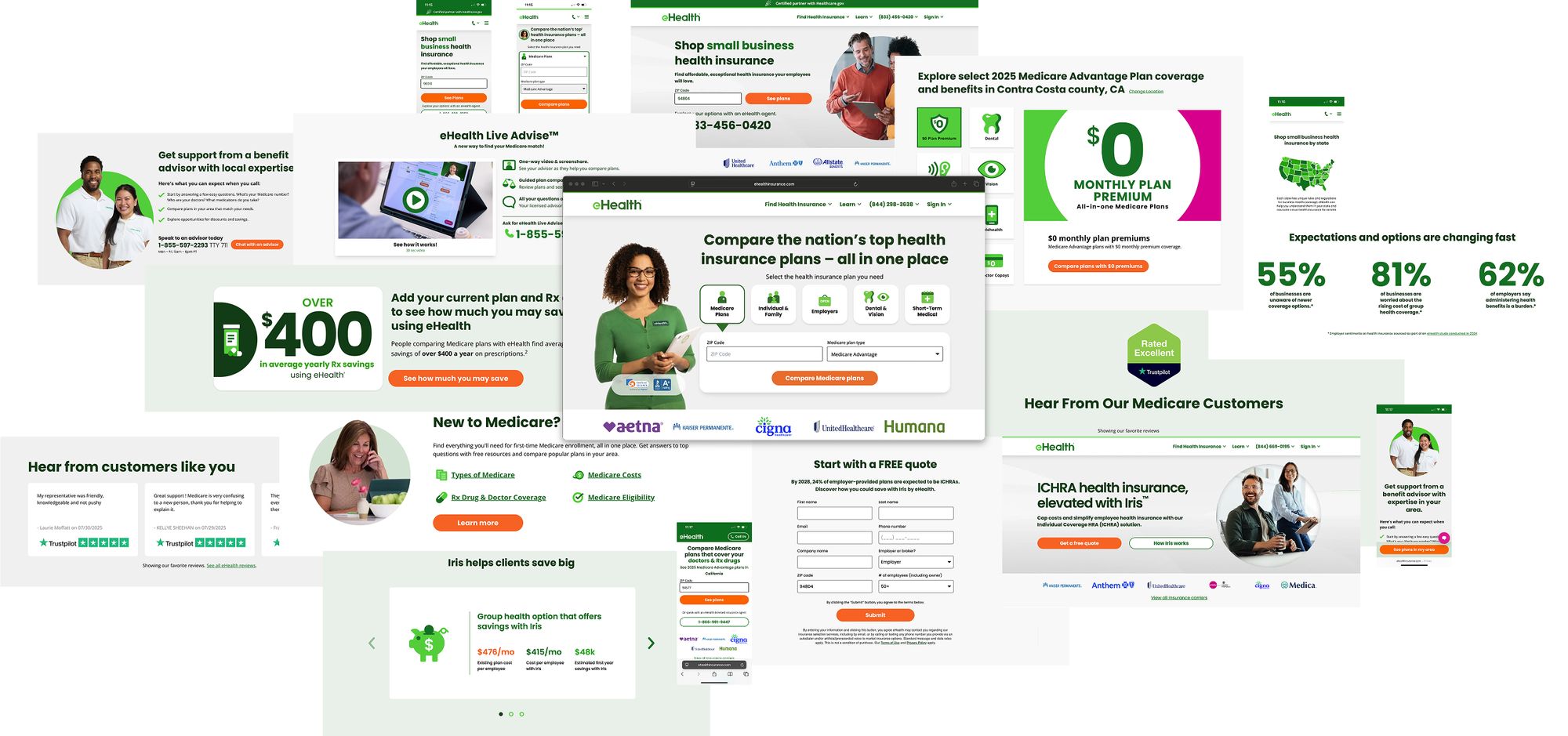
We designed and built out a platform for entry pages using a headless Wordpress instance that has allowed us to create a library of page modules and components that we are able to configure in numerous ways (think lego blocks) to develop pages for specific audiences and campaigns.
On these landing pages we have baked in dynamic elements that to deliver a customized marketing message for each users state, ZIP code, and echo the value proposition the user saw on the advertisement.
We are also able to dynamically toggle on/off telephone numbers, so that when we have spare capacity in our telephonic sales center we can drive more phone calls, and we are able to do this without hurting site conversion.
More to come...